

Breast Reconstruction Pathways
Deep Inferior Epigastric Perforator (DIEP) Flap Breast Reconstruction

A deep inferior epigastric perforator (DIEP) flap is a breast reconstruction procedure that uses skin, fat, and blood vessels from the lower abdomen—while preserving the abdominal muscles—to create a natural, long-lasting breast.
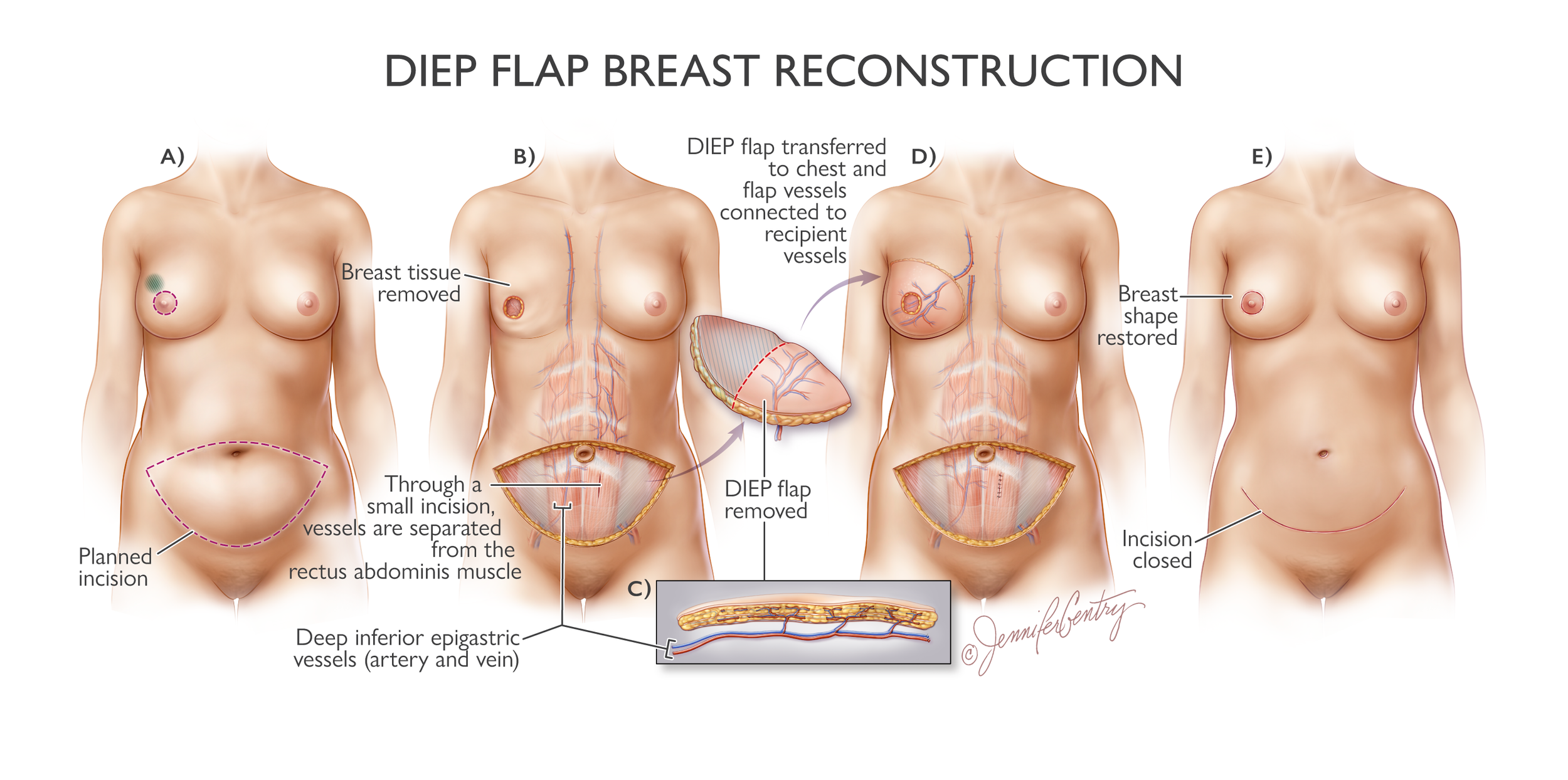
The Deep Inferior Epigastric Perforator (DIEP) flap is one of the most advanced and commonly performed types of natural tissue breast reconstruction. Instead of using implants, this procedure rebuilds the breast using your own skin and fat from the lower abdomen—similar to a “tummy tuck.”
The unique benefit of the DIEP flap is that it preserves your abdominal muscles, which helps maintain strength and lowers the risk of complications compared to older techniques.
How It Works
A section of skin, fat, and blood vessels is taken from the lower abdomen.
Using microsurgery, the surgeon reconnects the tiny blood vessels from the flap to blood vessels in the chest.
The tissue is shaped into a new breast mound, creating a natural look and feel.
Because no abdominal muscle is removed, core strength is better preserved compared to TRAM flap surgery.
Who May Be a Candidate
The DIEP flap may be a good option if:
You want reconstruction that uses your own tissue rather than an implant.
You have enough abdominal tissue to donate (often women who have had children or carry extra belly fat).
You are healthy enough for a longer surgery and recovery.
You are having immediate reconstruction (at the time of mastectomy) or delayed reconstruction (months or years later).
Your surgeon will evaluate your overall health, anatomy, and cancer treatment plan to see if this is right for you.
Benefits of DIEP Flap Reconstruction
Natural look and feel: Breasts are soft and warm, more like natural breast tissue.
Lasting results: Unlike implants, which may need replacement, DIEP flaps usually last a lifetime.
Abdominal contouring: Many women appreciate the “tummy tuck” effect from removing lower belly tissue.
Preserves muscle: Because the abdominal muscle is not removed, recovery is easier than with older TRAM flaps.
Symmetry options: Can be combined with surgery on the opposite breast for balance.
Things to Keep in Mind
Longer surgery: DIEP flap procedures take several hours and require microsurgical expertise.
Longer recovery: Expect 4–6 weeks before resuming full activities.
Abdominal healing: There will be a scar across the lower abdomen (similar to a C-section or tummy tuck).
Not for everyone: Women who are very thin, smoke, or have certain health conditions may not be candidates.
Possible complications: Like any surgery, risks include delayed healing, flap loss (rare), or abdominal weakness.
Emotional Considerations
Many women who choose the DIEP flap feel comforted knowing their reconstruction is made from their own body. The natural feel can restore a sense of wholeness that implants may not provide. Others may find the longer recovery challenging, especially while balancing family or work responsibilities. Both perspectives are valid—what matters is what feels right for you.
A Personal Choice
The DIEP flap uses your own body’s tissue to create a breast that looks and feels natural—restoring not only shape but a sense of self. It is considered a “gold standard” in natural tissue breast reconstruction because it blends durability, natural results, and preservation of muscle. But it’s also a complex procedure, and it isn’t the best fit for everyone.
At Coastal Hope for Healing, we want you to feel informed and supported as you explore your options. Whether you choose a DIEP flap, another reconstruction method, or decide to go flat, your choice is valid—and we’re here to walk beside you.