

Breast Reconstruction Pathways
Direct-to-Implant Breast Reconstruction

Direct-to-implant breast reconstruction is a breast reconstruction method where the final implant is placed immediately during mastectomy, skipping the tissue expander stage.
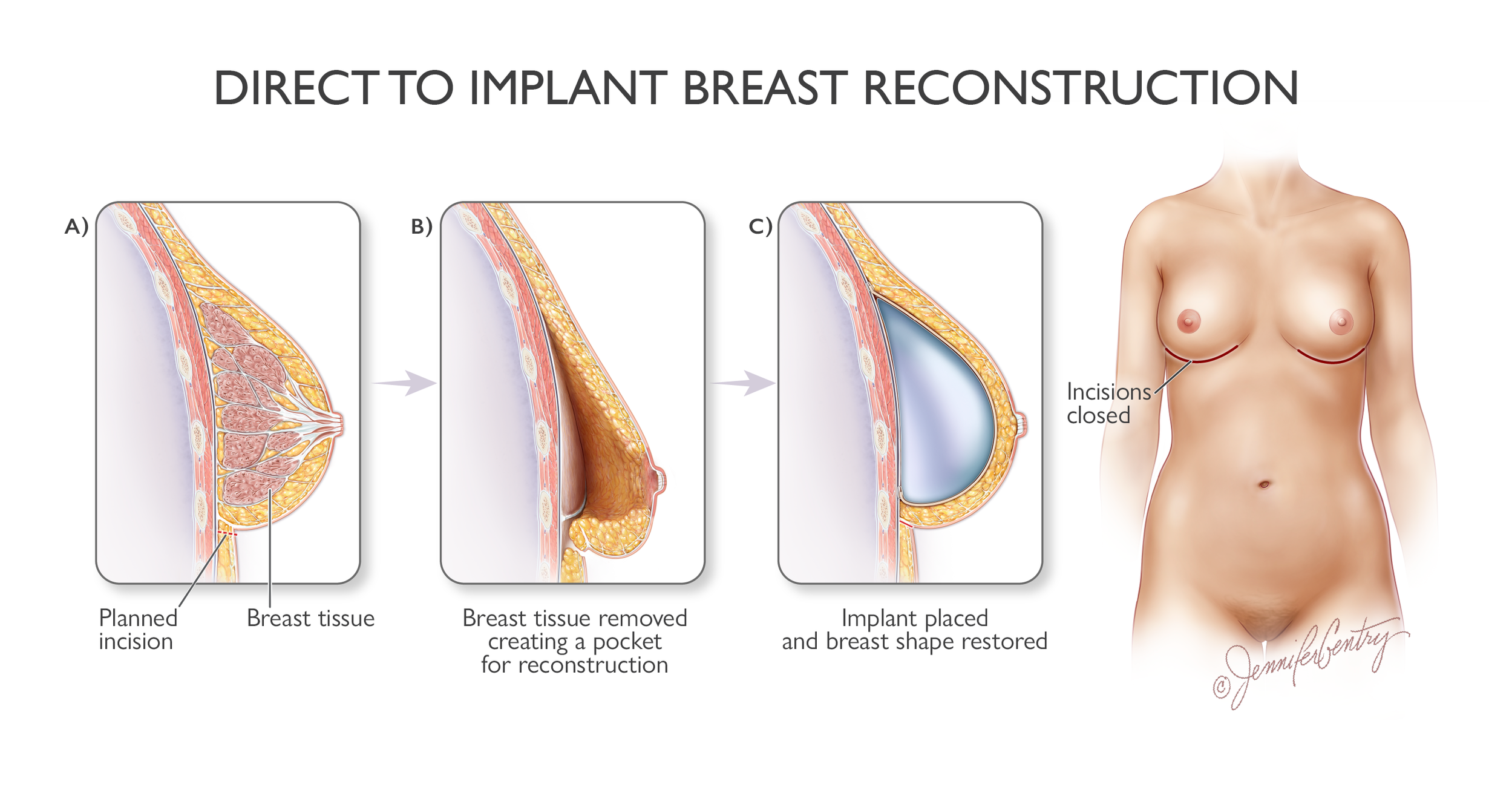
For some women, it’s possible to have breast reconstruction in one step, at the same time as their mastectomy. This approach is called direct-to-implant reconstruction (sometimes called “single-stage” reconstruction). Instead of placing a temporary tissue expander first, the surgeon places the permanent breast implant right away.
Step 1: Mastectomy and Implant Placement
During the same surgery: After your breast tissue is removed during mastectomy, your surgeon places a breast implant (saline or silicone) under the skin and chest muscle, or under a special supportive mesh called an acellular dermal matrix (ADM).
Why it’s different: Unlike the expander-implant method, there’s no need for a temporary “balloon” to stretch the skin over time. The final implant is placed immediately.
Surgical time: The surgery takes longer than mastectomy alone but usually shorter than flap (tissue-based) procedures.
Step 2: Healing and Recovery
Hospital stay: Often 1–2 days, depending on the extent of the mastectomy and whether both breasts are reconstructed.
What to expect: Some swelling, soreness, and tightness are common, but many women appreciate avoiding the weeks or months of expander “fills.”
Support during healing: Special bras or compression garments may be recommended to help support the implant as your body adjusts.
Why Women Choose This Option
One surgery instead of two: No expander placement or later implant exchange.
Faster path to final results: You wake up from surgery with your new breast shape already in place.
No expansion visits: Avoids the weekly or biweekly office visits needed with tissue expanders.
Cosmetic benefits: When possible, skin-sparing or nipple-sparing mastectomy techniques combined with direct-to-implant reconstruction can create very natural results.
Things to Keep in Mind
Not for everyone: Direct-to-implant is usually best for women with enough healthy skin and good blood supply after mastectomy. If the skin is thin, damaged by radiation, or doesn’t heal well, a staged expander approach may be safer.
Higher risk in some cases: Because the implant is placed right away, complications like infection, wound healing problems, or implant loss may be slightly higher compared to staged reconstruction.
Implants aren’t permanent: Even with this one-step approach, implants may need replacement in the future.
Radiation therapy can affect outcomes: If you need radiation after mastectomy, implants may harden or change shape over time.
Who May Be a Candidate
Women having prophylactic mastectomy (preventive surgery, often due to BRCA or other high-risk genetic mutations).
Women with smaller to medium breast size and minimal droop, where the skin can more easily fit over the implant.
Women in good overall health, with no major healing concerns.
A Personal Decision
Direct-to-implant reconstruction offers the benefit of fewer surgeries and immediate results, but it isn’t the right choice for everyone. Some women value the speed and simplicity, while others may prefer staged reconstruction or flap procedures for more flexibility or natural results. Direct-to-implant reconstruction can feel like a “fast track” to regaining your shape — but your journey is always yours to decide.
At Coastal Hope for Healing, we believe informed choices promote better healing. We’re here to provide clear explanations, connect you with trusted resources, and share stories from women who’ve walked each path—so you can feel supported in whichever option feels best for you.