

Breast Reconstruction Pathways
Stacked Deep Inferior Epigastric Perforator (DIEP) Flap Breast Reconstruction
Stacked Deep Inferior Epigastric Perforator (DIEP) flap breast reconstruction is an advanced microsurgical procedure that uses two sections of skin and fat from the lower abdomen to rebuild one breast, providing added volume while preserving the abdominal muscles and creating a natural look and feel.
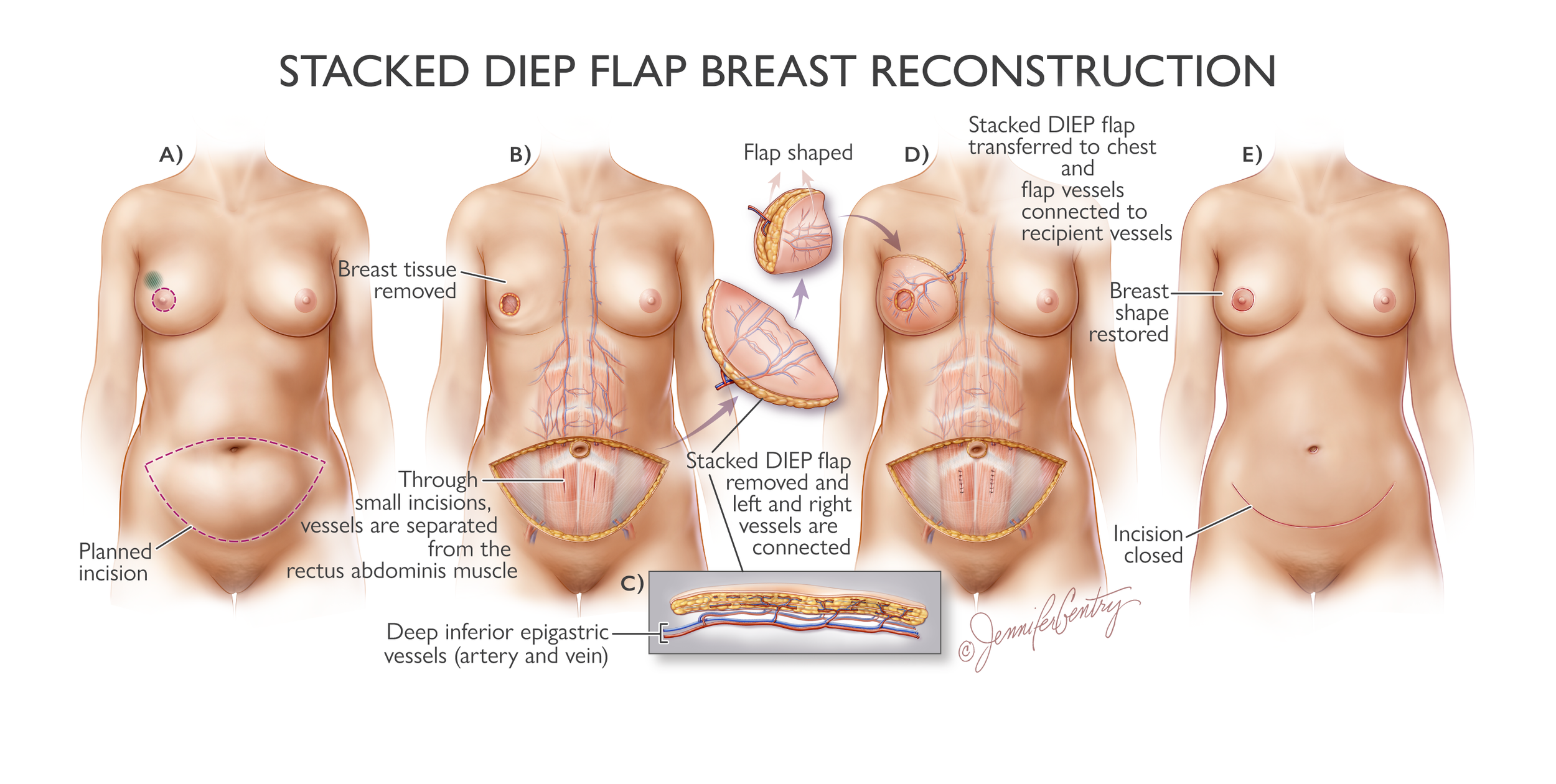
Stacked DIEP flap breast reconstruction is an advanced microsurgical technique that uses two flaps of your own abdominal tissue to rebuild one breast. It offers the same natural look and feel as a traditional DIEP flap — with added volume for women who need or want more fullness in their reconstruction.
This approach is often recommended for women who are thin, have limited abdominal tissue, or want to match a naturally fuller breast.
What is a Stacked DIEP Flap?
A stacked DIEP flap is a variation of the standard DIEP flap procedure.
Instead of using one section of tissue from the lower abdomen to create a breast, the surgeon uses two separate flaps and carefully layers (or “stacks”) them together to form a single reconstructed breast. Each flap is connected to its own blood supply to keep the tissue healthy and viable.
Like a standard DIEP flap, this technique:
Uses skin and fat only — no muscle
Preserves abdominal strength
Creates a breast that looks, feels, and ages naturally
Who May Benefit from a Stacked DIEP Flap?
This option may be ideal if you:
Have a slender body type with limited donor tissue
Want a larger reconstructed breast than one flap can provide
Need to match a fuller natural breast on the opposite side
Have had prior abdominal surgery that limits available tissue
Want an autologous (your-own-tissue) option instead of implants
Not everyone is a candidate — evaluation by a microsurgeon experienced in stacked flap techniques is essential.
How the Procedure Works
Two flaps of skin and fat are taken from the lower abdomen
The flaps are transferred to the chest
Each flap’s blood vessels are carefully connected under a microscope
The flaps are layered together to create one breast mound
The abdomen is closed similar to a tummy tuck
The result is a full, soft, natural-looking breast created entirely from your own tissue.
Benefits of Stacked DIEP Flap Reconstruction
Creates more volume than a standard DIEP flap
Maintains the natural feel of autologous reconstruction
No muscle removal from the abdomen
Long-lasting results that change naturally with your body
Avoids the need for implants
Can improve symmetry when matching a larger breast
Considerations to Keep in Mind
Surgery is more complex than a standard DIEP flap
Operative time is typically longer
Requires a surgeon with advanced microsurgical expertise
Not available at all reconstruction centers
Recovery is similar to DIEP flap but may involve:
Slightly longer hospital stay
More careful early monitoring of blood flow
Recovery and Healing
Most patients stay in the hospital 3–5 days after surgery. Recovery includes:
Gradual return to daily activities over 4–6 weeks
Temporary abdominal tightness or swelling
Follow-up visits to monitor healing and circulation
Possible later revision procedures for refinement and symmetry
Many women say the trade-off is worth it for the confidence and comfort of a breast reconstructed entirely from their own tissue.
Stacked DIEP vs. Standard DIEP Flap
Is a Stacked DIEP Flap Right for You?
Every reconstruction journey is unique. The right option depends on:
Your body type
Your reconstruction goals
Your medical history
The expertise available in your area
Talking with a board-certified plastic surgeon who specializes in microsurgical breast reconstruction is the best way to explore whether a stacked DIEP flap could be part of your healing path.
Tissue UsedBest ForComplexityBlood Vessel ConnectionsFinal Breast SizeMuscle PreservationStandardOne FlapModerate Volume NeedsAdvancedOne SetModerateYesStackedTwo FlapsHigher
Volume
NeedsMore AdvancedTwo SetsGreater FullnessYesAt Coastal Hope for Healing, we don’t provide medical advice or referrals — but we do believe in the power of education and community. Our goal is to help you understand your reconstruction options, feel empowered in conversations with your care team, connect with others who’ve walked this road before, and find hope, confidence, and support through every step.